
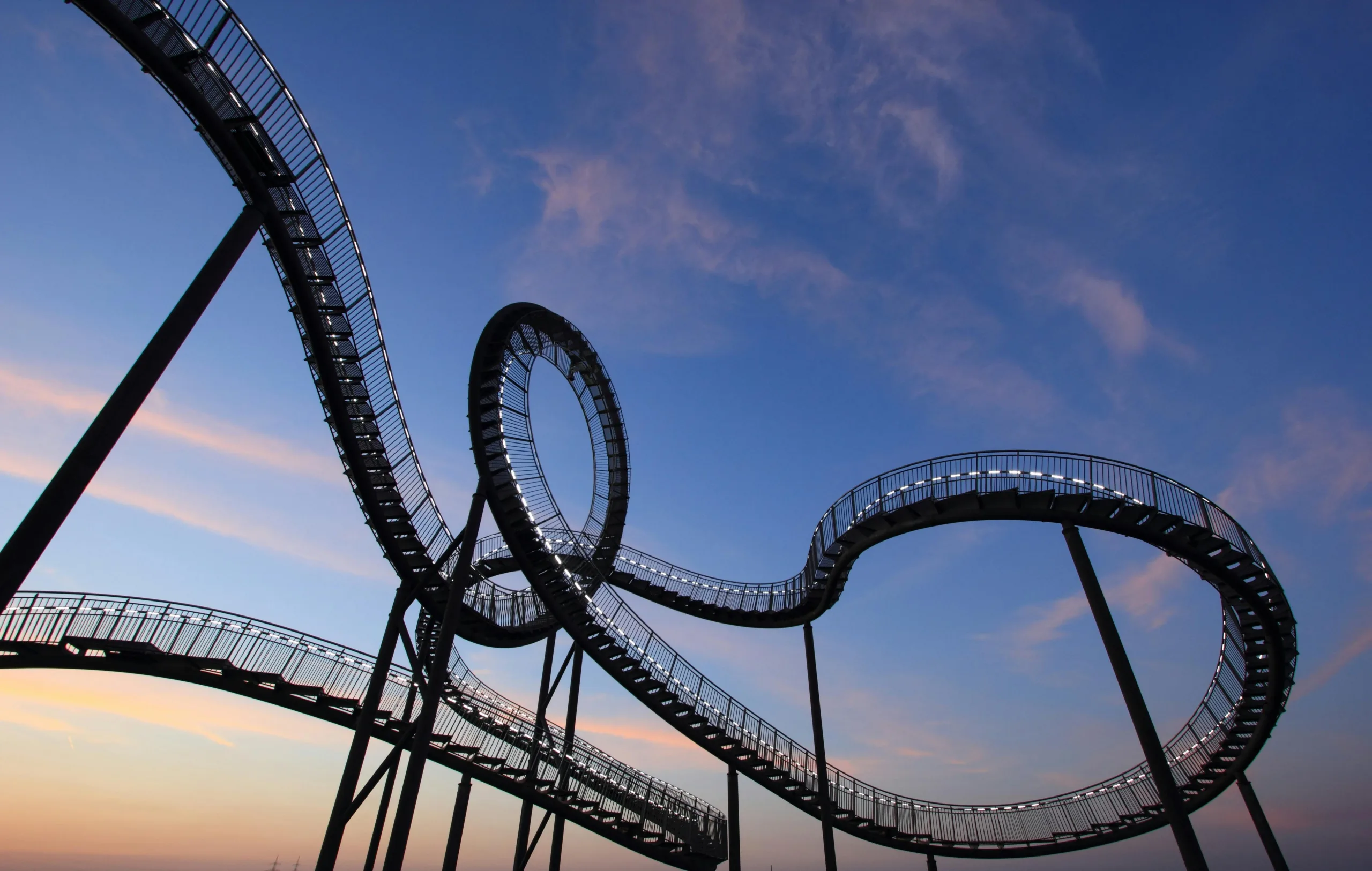
Equity markets have always had a flair for the dramatic. One month they surge, the next they dip, and occasionally they take investors on a full loop‑the‑loop. For long term investors and business owners, these swings are rarely comfortable. Yet, understanding why they happen and how to navigate them may be one of the most valuable financial skills you can build.
Let’s unpack the emotional and financial dynamics of the equity rollercoaster and explain why the most important instruction is often the simplest: stay in your seat.
Why Equities Move the Way They Do
Equities react to a constant stream of information. Company earnings, inflation figures, interest rate updates, geopolitical tensions, government budgets, and global sentiment all play a part. Markets price in expectations long before they become realities. This is why shares can rise on “bad” news if investors believe the worst is behind them, or fall on “good” news if they fear improvement won’t last.
Above all, equities are forward-looking. They move on what investors think will happen. That gives them huge long-term potential, but also makes for a bumpy ride along the way.
Volatility Isn’t a Bug – It’s a Feature
Periods of market turbulence can feel unnerving, especially when headlines amplify every movement. But volatility is the natural trade-off for higher long-term returns.
Over time:
- Markets recover from corrections
- Strong businesses continue to grow
- Innovations reshape entire industries
- Long-term investors benefit from staying invested through cycles
Those who try to “jump off” during declines often lock in losses and miss the strongest rebound days, which historically have been responsible for a significant share of long-term returns.
Why Staying Invested Matters More Than Timing
A common investor temptation is to sell during downturns and re‑enter when things feel calmer. Unfortunately, the market rarely cooperates with that plan. Recoveries are unpredictable and often occur suddenly.
Missing even a small handful of the market’s best days can dramatically reduce long-term performance. For investors building wealth through pensions, lump sums, or regular contributions, remaining invested is typically the more reliable strategy.
Staying seated doesn’t mean ignoring risk. It means recognising that disciplined, long-term investing tends to reward patience more consistently than short-term prediction.
Managing Your Emotions During Market Swings
Market volatility doesn’t only test portfolios; it tests investors. Emotional decision-making often leads to avoidable mistakes, such as selling too quickly, chasing trends, or reacting to noisy headlines.
Instead, build habits that support rational decision-making:
- Focus on long-term outcomes rather than daily fluctuations
- Use planning milestones, not market movements, as your guide
- Seek objective advice before changing course
Staying calm during turbulence is easier when you have a trusted adviser and a well‑constructed plan behind you.
Final Thoughts
Equity markets will always rise and fall, sometimes sharply, sometimes slowly, but always with purpose. Understanding that volatility is part of the journey can help you stay invested, stay disciplined and stay focused on long-term results.
If you want to review your own investment strategy or explore whether your current mix is built for the road ahead, book a confidential consultation with Chartered Capital today.
The content of this article is for information purposes only and does not constitute a personal recommendation. You should always speak to a financial adviser that is regulated by the Central Bank of Ireland when considering financial advice. Any recommendation made will be based on a full suitability assessment that will include a comprehensive review of your circumstances, needs and objectives. Past Performance Is Not A Guide To Future Returns.



In Their Own Words