
Most people know the basic principles of financial success. Spend less than you earn. Avoid unnecessary debt. Invest consistently. Remain patient when markets fall.
The difficulty is not always knowing what to do. It is continuing to do it when emotions, headlines and competing priorities get in the way.
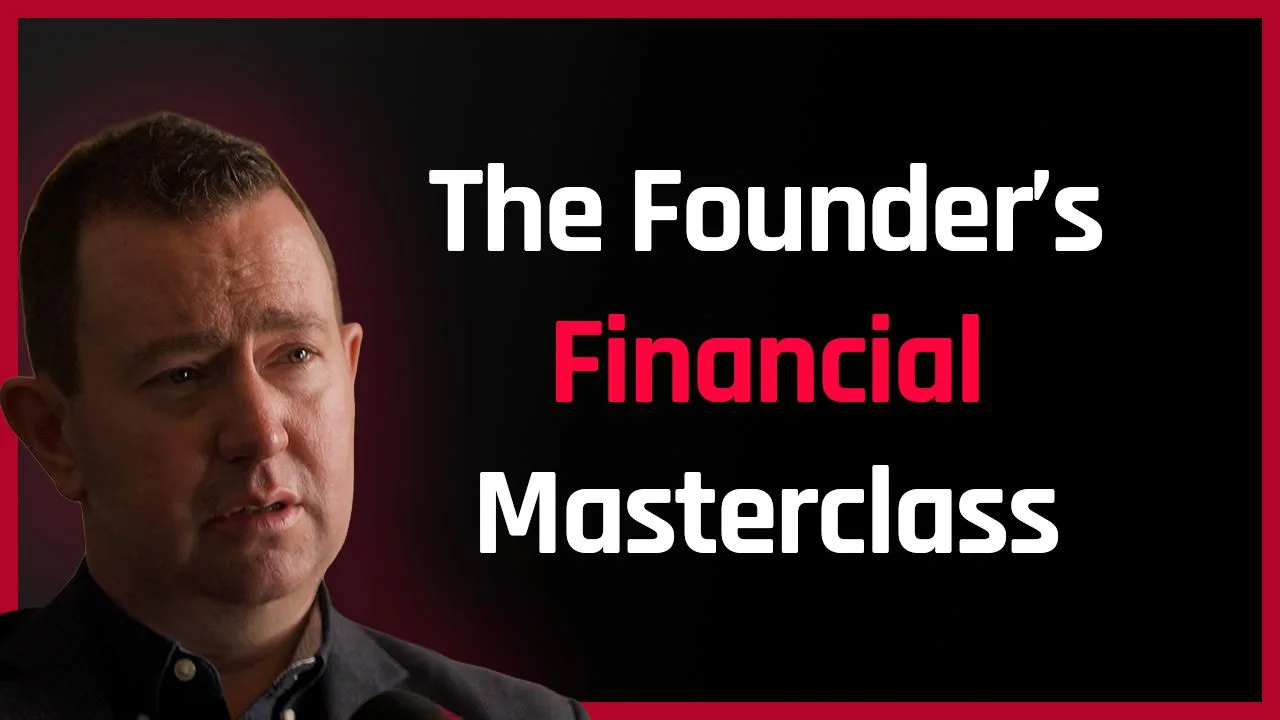
This article draws on the discussion between Diarmuid and Gary Fox on the Entrepreneur Experiment podcast on Founder Finance 101: The Simple Money System Founders Actually Need. Check it out at the links below:
Financial Success Is Not an Intelligence Test
Highly intelligent people can still make poor financial decisions. A founder may understand complex contracts, negotiate major deals and lead a large team. Yet the same person may panic during a market fall, delay starting a pension or invest too much in an opportunity recommended by a friend.
Financial decisions involve uncertainty so they trigger emotions that do not appear in a simple calculation. Fear, confidence, regret and impatience can all change how a person behaves.
The best financial strategy is not simply the one with the highest projected return. It is the one you can maintain through difficult periods.
Your Early Experiences Shape Your Money Habits
People do not begin adulthood with a neutral view of money. Family experiences, economic conditions and childhood conversations can shape how we think about security, success and risk.
Someone who experienced financial hardship may hold excessive cash because it creates emotional safety. Another person may associate money with status and continually seek visible signs of success. These beliefs can remain active even after circumstances improve.
For Irish founders, this may appear as:
- Fear of losing everything after building a profitable company
- Reluctance to discuss money openly
- Reinvesting every euro because personal spending feels irresponsible
- Avoiding pensions because retirement feels too distant
- Choosing property because it feels more familiar
- Keeping large cash balances because investing feels uncertain
Understanding these patterns is not about assigning blame. It is about recognising what is influencing the decision.
Founders Can Be Overconfident in Familiar Areas
Confidence is an essential founder trait. A business may never have survived without the owner’s willingness to act while others hesitated. However, success in one area can create the belief that the same judgement will transfer automatically to investing.
A founder may understand their own company exceptionally well. That does not mean they have the time or expertise to evaluate every share, fund, property or start-up opportunity. This is where confidence can become concentration risk.
The answer is not to remove the founder’s instinct. Instead, the financial plan should give that instinct appropriate boundaries.
Fear Can Be Just as Costly as Overconfidence
Some investors take too much risk. Others avoid it entirely.
Holding all long-term wealth in cash may feel secure because the balance does not fluctuate. yet inflation can reduce what that money can buy. Likewise, an investor who leaves a pension in an overly cautious strategy for several decades may avoid visible volatility but create another risk: insufficient long-term growth.
Risk does not disappear because an investment feels comfortable. A strong financial plan considers both the risk of losing money and the risk of failing to achieve the goal.
Why We Struggle to Picture Our Future Selves
Saving for retirement requires us to prioritise a person we have never met: our future self. A founder may clearly understand the benefit of investing today but current demands feel more real than a retirement that may be decades away.
This creates a natural tendency to delay. The business needs investment now. The holiday can happen now. The pension can wait until next year.
However, next year often brings another set of urgent priorities. Automation helps bridge this gap. When saving and investing happen automatically, progress no longer depends on repeatedly choosing the future over the present.
Losses Feel More Powerful Than Gains
People tend to feel the pain of losing money more intensely than the satisfaction of gaining the same amount. As a result, a temporary fall can feel more important than years of previous growth.
This emotional response may encourage investors to sell during a downturn. Unfortunately, selling turns a temporary decline into a permanent loss and creates another difficult decision: when to invest again.
A suitable strategy should account for how the investor may actually behave, not simply how they expect to behave while markets are calm.
Build a System That Protects You From Yourself
A sound financial system reduces the number of decisions that must be made during emotional moments.
It may include:
- Clear short-term and long-term goals
- An appropriate emergency fund
- Automated pension or investment contributions
- Diversification across assets
- Defined limits for speculative investments
- Regular reviews at agreed intervals
- A trusted professional to challenge impulsive decisions
The purpose of this structure is not to remove flexibility. It is to ensure that important choices are made thoughtfully rather than in reaction to fear, excitement or a headline.
The Planner’s Role Is Often Behavioural
Financial planning involves calculations, pensions, investments and tax considerations. However, much of its long-term value comes from behaviour.
A planner can help clients understand their options, challenge assumptions and remain focused during uncertainty. They can also provide an objective perspective when a decision feels emotionally urgent.
This does not mean clients give up control. Instead, they gain a framework for making important decisions with greater clarity.
Final Thoughts
Wealth is not built by knowledge alone. It also depends on patience, consistency and the ability to avoid costly decisions during emotional periods.
Founders already understand the value of strong systems within a business. Applying the same discipline to personal finances can help turn good intentions into long-term progress.
If you would like to build a financial plan that reflects both your goals and the way you make decisions, book a confidential consultation with Chartered Capital.
The content of this article is for information purposes only and does not constitute a personal recommendation. You should always speak to a financial adviser that is regulated by the Central Bank of Ireland when considering financial advice. Any recommendation made will be based on a full suitability assessment that will include a comprehensive review of your circumstances, needs and objectives. Past Performance Is Not A Guide To Future Returns.

In Their Own Words